
 6 minutes read6 minutes read
Summary:
- STIs don’t cause acne, but some cause spots, bumps or blisters that can look like pimples, especially on or around the genitals.
- Herpes, genital warts, Syphilis, Molluscum contagiosum and Mpox can all look like pimples at first. Harmless bumps, such as ingrown hairs, Fordyce spots and pearly penile papules, are often mistaken for STIs.
- If you have a spot or bump on or around your genitals and aren’t sure what it is, the Better2Know Blemish Screen tests a swab for Herpes 1, Herpes 2, HPV and Syphilis.
Sexually transmitted infections (STIs), sometimes called sexually transmitted diseases (STDs), can cause all sorts of symptoms. Finding a new spot or bump, especially around your genitals, can be worrying.
In this blog, we explain which STIs can look like pimples, which harmless bumps are often mistaken for STIs, and how to tell the difference.
Do STIs cause pimples or just look like them?
STIs don’t cause acne, but some STIs cause spots, bumps or blisters that can look like pimples. Herpes blisters, genital warts, the first sore of Syphilis, Molluscum contagiosum and the Mpox rash can all be mistaken for pimples, especially in the early stages.
Many spots and bumps around the genitals are harmless. But you can’t always tell by looking, so the only way to know for sure whether a bump is caused by an STI is to get it checked.
What is a pimple?
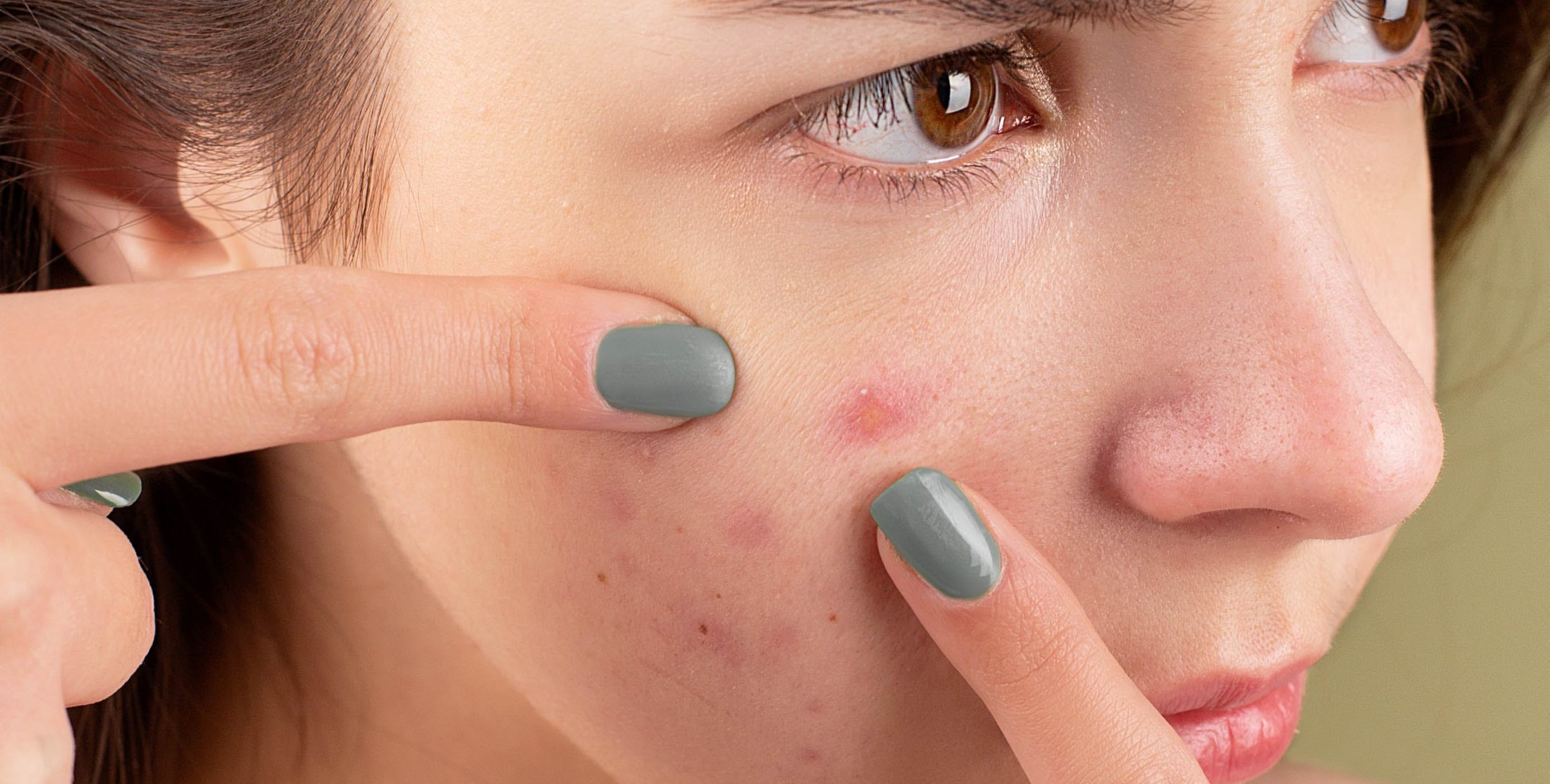
Pimples, or spots, are most often a sign of acne. Acne happens when hair follicles in the skin get blocked with oil and dead skin cells. It usually affects the face, chest and back.
There are several types of acne spots:
- whiteheads, which are small bumps
- blackheads, which are black or brown spots that are usually flat but may be raised
- papules, which are raised bumps
- pustules, which are raised bumps filled with pus
- nodules and cysts, which are larger lumps under the skin that can be painful
Spots can also appear around the genitals, for example when a hair grows back into the skin after shaving or a hair follicle becomes inflamed.
Which STIs can look like pimples?
Herpes
Herpes causes small blisters that burst to leave red, open sores on or around the genitals, bottom or mouth. The blisters often appear after a tingling, burning or itching feeling. Unlike a pimple, Herpes blisters often appear in small groups, can be painful, and turn into open sores. Read more in “What can be mistaken for Herpes?”
Genital warts
Genital warts are caused by HPV, one of the most common STIs. They are usually small, rough lumps on the skin, and they can appear on their own or in groups that look like a cauliflower. They can be white, red, skin-coloured or darker. They usually don’t hurt, but they can itch or bleed.
Syphilis
The first sign of Syphilis is often a single small, firm, painless bump that quickly turns into an open sore called a chancre. It usually appears around 3 weeks after infection, where the bacteria entered the body, such as the genitals, anus or mouth. Because it doesn’t hurt, it is easy to miss. Read more in “What does a Syphilitic sore look like?”
Molluscum contagiosum
Molluscum contagiosum is a skin infection caused by a virus. It causes small, firm, raised spots about 2 to 5mm wide, often with a dimple in the middle. When adults catch it through sex, the spots may appear on the lower tummy, genitals and thighs. They usually clear up on their own, although this can take up to 18 months.
Mpox
The Mpox rash starts as raised spots, which can look like pimples, before turning into small blisters filled with fluid and then scabs. It can appear anywhere on the body, including the genitals, anus, mouth, palms and soles, and it may be painful or itchy. People with Mpox may also have a high temperature, headache or swollen glands. The Better2Know Monkeypox Swab home test checks a swab taken from a spot or blister.
Harmless bumps that are often mistaken for STIs
Not every bump on or around the genitals is an STI. These common bumps are not STIs.
Ingrown hairs and folliculitis
Ingrown hairs cause raised, itchy bumps in areas you shave or wax, including the pubic area. Sometimes you can see the trapped hair, and the bump may fill with pus if it becomes infected. Folliculitis is inflammation of the hair follicles, which causes tender red spots, often with a small head of pus. It often follows shaving, waxing or plucking.
Fordyce spots
Fordyce spots are small yellow or white bumps, 1 to 5mm across, that can appear on the lips, the inside of the cheeks, the penis or the vulva. They are very common, found in about 80% of adults, and they are not infectious.
Pearly penile papules
Pearly penile papules are small, skin-coloured, dome-shaped or thread-like bumps in one or more rows around the head of the penis. They affect between 8% and 43% of men, are not infectious, and don’t need treatment. People often worry about what they are, but they are not genital warts.
Skin cysts
A skin cyst is a round lump under the skin. Cysts are usually harmless, and they can appear in many places, including the scrotum and inside the vagina. You can’t catch a cyst from someone who has one.
How to tell if a spot is a pimple or an STI
You can’t always tell by looking, because some STIs look like harmless spots and some harmless bumps look like STIs. Get a spot or bump on or around your genitals tested if it:
- turns into an open sore or ulcer
- appears as a group of blisters, especially after tingling, burning or itching
- is a rough lump, or looks like a cauliflower
- has a dimple in the middle
- doesn’t hurt, even if it goes away on its own
- appeared after sex with a new partner
- comes with other symptoms, such as a rash, a high temperature or swollen glands
Try not to squeeze or pick a spot or blister. If it is Herpes, touching it can spread the virus. A swab taken from a sore or blister is the most reliable way to test for Herpes, and it can also test for Syphilis.
FAQs
Can Herpes look like a pimple?
Yes. Herpes starts as small blisters that can look like pimples. Unlike pimples, they usually burst to leave painful, open sores, and they often come after tingling, burning or itching. If you have a sore that might be Herpes, the Herpes Simplex Type 1 and 2 (Swab) test can check it.
Can you get pimples on your genitals?
Yes. Ingrown hairs and folliculitis can cause spots in the pubic area, especially where you shave or wax. But STIs such as Herpes, genital warts and Syphilis also affect the genitals, so get any new or unusual bump checked.
Can an STI cause spots on your face?
Some can. Herpes causes cold sores around the mouth, and Syphilis, HIV and Mpox can cause a rash that includes the face. Read more in “What STIs can cause a face rash?”
Final thoughts
Some STIs, such as Herpes, genital warts and Syphilis, can look like pimples, and many harmless bumps look like STIs. You can’t always tell the difference by looking.
If you have a spot or bump on or around your genitals and aren’t sure what it is, get it tested. Book a Blemish Screen at a clinic near you or order a home test kit. Our Patient Care Team is available 24/7 on 020 7099 0955.
About this article
Not in the UK? Choose your country from the selector at the top of the page for local tests and prices.
This article originally appeared on 2 February 2024 and was last updated on 29 September 2026.
Medical review. This article was medically reviewed by Dr Steve Chapman, Doctor with a wealth of clinical experience in the field of STIs, on 11 June 2024. It is general information and not a substitute for personal medical advice.
Sources
- NHS, Acne, reviewed 22 September 2026. https://www.nhs.uk/conditions/acne/
- NHS, Genital herpes, reviewed 27 June 2023. https://www.nhs.uk/conditions/genital-herpes/
- NHS, Cold sores, reviewed 19 February 2024. https://www.nhs.uk/conditions/cold-sores/
- World Health Organization, Herpes simplex virus, fact sheet, 30 May 2025. https://www.who.int/news-room/fact-sheets/detail/herpes-simplex-virus
- DermNet, Herpes simplex, October 2015. https://dermnetnz.org/topics/herpes-simplex
- NHS, Genital warts, reviewed 10 July 2023. https://www.nhs.uk/conditions/genital-warts/
- Centers for Disease Control and Prevention, About genital HPV infection, reviewed 31 January 2025. https://www.cdc.gov/sti/about/about-genital-hpv-infection.html
- NHS, Syphilis, reviewed 17 March 2026. https://www.nhs.uk/conditions/syphilis/
- DermNet, Syphilis, March 2018. https://dermnetnz.org/topics/syphilis
- British Association for Sexual Health and HIV, BASHH UK guidelines for the management of syphilis 2024. https://bashh.org/_userfiles/pages/files/syphilis_2024.pdf
- NHS, Molluscum contagiosum, reviewed 14 May 2026. https://www.nhs.uk/conditions/molluscum-contagiosum/
- NHS, Mpox, reviewed 9 April 2026. https://www.nhs.uk/conditions/mpox/
- World Health Organization, Mpox, fact sheet, 26 August 2024. https://www.who.int/news-room/fact-sheets/detail/mpox
- Centers for Disease Control and Prevention, Mpox: signs and symptoms, 2 February 2023. https://stacks.cdc.gov/view/cdc/124364/cdc_124364_DS1.pdf
- NHS, Ingrown hairs, reviewed 1 September 2026. https://www.nhs.uk/conditions/ingrown-hairs/
- DermNet, Folliculitis, April 2014. https://dermnetnz.org/topics/folliculitis
- DermNet, Fordyce spots, July 2021. https://dermnetnz.org/topics/fordyce-spots
- DermNet, Pearly penile papules, 2008. https://dermnetnz.org/topics/pearly-penile-papules
- NHS, Skin cyst, reviewed 9 May 2023. https://www.nhs.uk/conditions/skin-cyst/