
 7 minutes read7 minutes read
Summary:
- It depends on the infection. Some STI germs, such as Gonorrhoea, survive best in fresh body fluid and die off as it dries, but some viruses, such as Hepatitis B and C, can survive on surfaces for days or even weeks.
- For many STIs, there is no reliable figure for how long they last on a sex toy. The safest approach is to wash toys after every use and cover them with a new condom for each person.
- If you have shared a sex toy with someone who might have an STI, the Better2Know Platinum Screen tests for 12 infections, from 28 days after possible exposure.
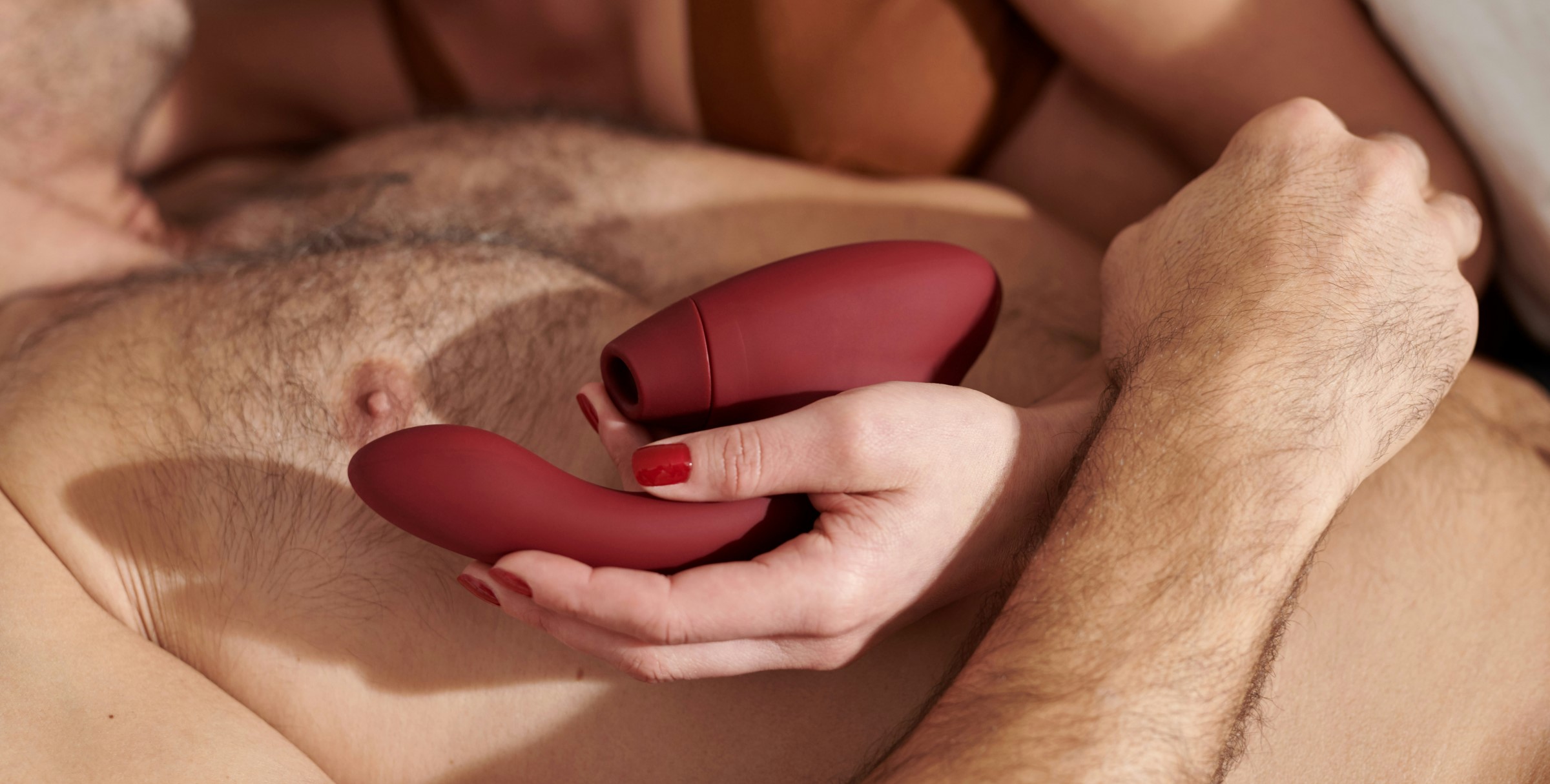
Sexually transmitted infections (STIs), sometimes called sexually transmitted diseases (STDs), can be passed on by sharing sex toys. How long an infection can stay on a toy depends on the germ, how much body fluid is left on the toy, and whether the toy has been cleaned.
In this blog, we explain what the research says about how long different STIs can survive outside the body, whether a toy can pass on other infections, and when to get tested.
How long do STIs survive outside the body?
There is no single answer, because each infection behaves differently. Most of what we know comes from lab studies, where germs were put onto surfaces on purpose. A germ that survives in a lab is not always able to infect someone.
Gonorrhoea bacteria die off quickly once they dry out, although they can last longer in pus. Viruses carried in blood, such as Hepatitis B and C, can survive for much longer. The biggest risk is fresh fluid, such as vaginal fluid, semen or blood, left on a toy that someone else then uses.
For a guide to which STIs spread through sex toys and how to use toys safely, read “Can you get an STI from a sex toy?”
How long each STI can last on a sex toy
Chlamydia
Chlamydia is carried in vaginal fluid and semen, and the NHS says it can be spread through fluid that gets onto sex toys and hands. There is no good data on exactly how long it stays infectious on a toy.
Gonorrhoea
In a 1979 study, researchers put Gonorrhoea bacteria onto toilet seats on purpose. Bacteria mixed with salt water died soon after drying, but bacteria in pus stayed alive for up to 2 hours. The researchers found no Gonorrhoea at all in 72 samples taken from real public toilets. A toy with fresh fluid on it can still pass it on.
Syphilis
Syphilis spreads through direct contact with a Syphilis sore. There is no reliable figure for how long it survives on a toy, and you can’t catch it from things like toilet seats, bathtubs or cutlery.
Herpes
Herpes spreads through skin-to-skin contact, and the NHS lists sharing sex toys with someone who has Herpes as a way to catch it. You can’t catch it from towels, swimming pools, saunas or toilet seats.
HPV
HPV is one of the few STIs that has been studied directly on sex toys. In a small US study, HPV was still found on some toys straight after they had been cleaned. 24 hours after cleaning, it was still found on some toys made from a soft plastic called thermoplastic elastomer (TPE), but not on any made from silicone. The study found traces of the virus, not whether it could still infect someone.
Trichomonas
The NHS lists sharing sex toys as one way Trichomonas can spread. There is no reliable data on how long it survives on a toy, and UK guidance says that in adults it is almost always passed on through sex.
HIV
HIV doesn’t survive long outside the body. But the NHS says it can be spread by sharing sex toys with someone who has a detectable viral load.
Hepatitis B and C
Hepatitis B can stay infectious on surfaces for at least 7 days. In a lab study, dried Hepatitis C stayed infectious for up to 6 weeks at room temperature. Among gay, bisexual and other men who have sex with men, sharing sex toys is a known risk factor for Hepatitis C.
Can a sex toy pass on other infections?
Gut infections
Toys that have been in the anus can carry tiny traces of poo. Infections such as Shigella, Giardia, Salmonella, E. coli and Hepatitis A spread when traces of poo get into the mouth, for example through rimming or oral sex after anal sex. UK health advice on Shigella includes not sharing sex toys.
Moving an infection to another part of your body
Chlamydia and Gonorrhoea can be found in the rectum of women who haven’t had anal sex, usually alongside a genital infection, which suggests these infections can spread from one part of the body to another. Wash your toy, or change the condom on it, before moving it from the vagina to the anus, or the other way round.
Thrush and bacterial vaginosis
Thrush and bacterial vaginosis (BV) are not STIs. The NHS says sex can trigger thrush and, less often, pass it on. BV is more common in women whose female partner has BV, but UK guidance doesn’t name sex toys as a cause.
How to clean and share sex toys safely
You can lower the risk of passing on an infection with a sex toy by:
- not sharing sex toys
- if you do share them, washing them and covering them with a new condom before anyone else uses them
- washing toys after every use, following the maker’s instructions. Warm water and mild, unscented soap, or a toy cleaner, is suitable for most toys, but washing may not remove every germ
- using a new condom each time on toys made from soft or porous materials, which are harder to clean
- washing a toy, or changing the condom, before moving it between the vagina and anus
There is no safe amount of time to wait before using a toy someone else has used. Washing it and using a new condom is safer than waiting.
Which test do you need?
If you have shared a sex toy with a new or casual partner, or with someone who has an STI, testing is the only way to know if you have caught an infection. Many STIs cause no symptoms.
The Better2Know Platinum Screen is our most comprehensive STI screen. It tests for 12 infections, including Chlamydia, Gonorrhoea, Herpes 1, Herpes 2, HIV, Syphilis, Trichomonas, Hepatitis B and Hepatitis C, from 28 days after possible exposure, with results in 3 days. You can book it at one of our clinics or order a Platinum Screen home test.
If you have a sore, blister, lump or wart on or around your genitals, the Blemish Screen tests a swab for Herpes 1, Herpes 2, HPV and Syphilis.
Not sure which test you need? Our Patient Care Team is available 24/7 on 020 7099 0955.
FAQs
How long should you wait before using a shared sex toy?
There is no safe waiting time. Some germs die quickly, but others can survive for days or weeks, so waiting doesn’t make a toy safe. Wash the toy and cover it with a new condom instead.
Can you catch an STI from a toy only you use?
You can’t catch a new STI from a toy that nobody else uses. But if you already have an infection, it may be possible to move it to another part of your body, so wash the toy before using it somewhere else.
Does washing a sex toy kill STIs?
Washing lowers the risk, but it may not remove everything. In one study, HPV was still found on some toys straight after cleaning. Covering shared toys with a new condom gives extra protection.
Final thoughts
How long an STI can stay on a sex toy depends on the infection. Some germs, such as Gonorrhoea, die off quickly once dry, while Hepatitis B and C can survive on surfaces for days or weeks. Washing toys after every use and covering them with a new condom for each person is the safest approach.
If you have shared sex toys and are worried about an STI, get tested. Book a Platinum Screen at a clinic near you or order a home test kit. Our Patient Care Team is available 24/7 on 020 7099 0955.
About this article
Not in the UK? Choose your country from the selector at the top of the page for local tests and prices.
This article originally appeared on 22 March 2024 and was last updated on 29 September 2026.
This article is general information and not a substitute for personal medical advice.
Sources
- NHS, Chlamydia, reviewed 24 October 2024. https://www.nhs.uk/conditions/chlamydia/
- NHS, Gonorrhoea, reviewed 16 December 2024. https://www.nhs.uk/conditions/gonorrhoea/
- Gilbaugh JH, Fuchs PC. The gonococcus and the toilet seat. New England Journal of Medicine, 1979;301(2):91-93. https://doi.org/10.1056/NEJM197907123010207
- Centers for Disease Control and Prevention, About Syphilis, reviewed 30 January 2025. https://www.cdc.gov/syphilis/about/index.html
- NHS, Genital herpes, reviewed 27 June 2023. https://www.nhs.uk/conditions/genital-herpes/
- Anderson TA, Schick V, Herbenick D, Dodge B, Fortenberry JD. A study of human papillomavirus on vaginally inserted sex toys, before and after cleaning, among women who have sex with women and men. Sexually Transmitted Infections, 2014;90(7):529-531. https://sti.bmj.com/content/90/7/529
- NHS, Human papillomavirus (HPV), reviewed 10 March 2026. https://www.nhs.uk/conditions/human-papilloma-virus-hpv/
- NHS, Trichomoniasis, reviewed 16 July 2025. https://www.nhs.uk/conditions/trichomoniasis/
- British Association for Sexual Health and HIV, UK national guideline on the management of Trichomonas vaginalis, 2021. https://www.bashh.org/_userfiles/pages/files/resources/tv_2021.pdf
- Centers for Disease Control and Prevention, How HIV spreads, reviewed 25 November 2024. https://www.cdc.gov/hiv/causes/index.html
- NHS, HIV and AIDS, reviewed 9 July 2025. https://www.nhs.uk/conditions/hiv-and-aids/
- Centers for Disease Control and Prevention, Clinical overview of hepatitis B, reviewed 29 August 2025. https://www.cdc.gov/hepatitis-b/hcp/clinical-overview/index.html
- Paintsil E, Binka M, Patel A, Lindenbach BD, Heimer R. Hepatitis C virus maintains infectivity for weeks after drying on inanimate surfaces at room temperature: implications for risks of transmission. Journal of Infectious Diseases, 2014;209(8):1205-1211. https://doi.org/10.1093/infdis/jit648
- British Association for Sexual Health and HIV, Guidelines on the management of viral hepatitis, 2026. https://www.bashh.org/_userfiles/pages/files/guidelines_on_the_management_of_viral_hepatitis_2026.pdf
- Centers for Disease Control and Prevention, Proctitis, proctocolitis, and enteritis: STI treatment guidelines, 2021. https://www.cdc.gov/std/treatment-guidelines/proctitis.htm
- UK Health Security Agency, What is Shigella? How do you catch it and how can it be avoided?, 26 March 2026. https://ukhsa.blog.gov.uk/2026/03/26/what-is-shigella-how-do-you-catch-it-and-how-can-it-be-avoided
- NHS, Hepatitis A, reviewed 24 April 2026. https://www.nhs.uk/conditions/hepatitis-a/
- British Association for Sexual Health and HIV, UK national guideline for the management of infection with Neisseria gonorrhoeae, 2025. https://www.bashh.org/_userfiles/pages/files/gc_guideline_2025_final.pdf
- British Association for Sexual Health and HIV, UK national guideline for the management of infection with Chlamydia trachomatis, 2026. https://www.bashh.org/_userfiles/pages/files/bashh_chlamydia_guideline_july_2026.pdf
- NHS, Thrush in men and women, reviewed 28 July 2023. https://www.nhs.uk/conditions/thrush-in-men-and-women/
- NHS, Bacterial vaginosis, reviewed 19 June 2026. https://www.nhs.uk/conditions/bacterial-vaginosis/
- British Association for Sexual Health and HIV, UK national guideline for the management of bacterial vaginosis, 2012. https://www.bashh.org/_userfiles/pages/files/resources/bv_2012.pdf
- NAM aidsmap, Sex toys and the risk of HIV transmission. https://www.aidsmap.com/about-hiv/sex-toys-and-risk-hiv-transmission
- Essex Sexual Health Service, Let’s talk about sex toys: exploring pleasure safely and confidently. https://essexsexualhealthservice.org.uk/lets-talk-about-sex-toys-exploring-pleasure-safely-and-confidently/