

 3 minutes read3 minutes read
Knowing the best time to get tested for Herpes is essential for getting accurate results and protecting your sexual health. Herpes is very common, and many people who have the virus do not experience any symptoms. This can make it difficult to know whether you should be tested, and when.
The timing of your test depends on whether you have symptoms, when you may have been exposed, and which type of Herpes test you take. Understanding these factors can help you choose the right test at the right time and give you peace of mind.
What is Herpes?
Herpes is a viral infection caused by the Herpes simplex virus (HSV). Around one in five people has some form of Herpes. There are two main types:
- HSV‑1, which more commonly causes oral Herpes (cold sores)
- HSV‑2, which more commonly causes genital Herpes
Both types can be passed on through skin‑to‑skin contact, including oral, vaginal, and anal sex. Once infected, the virus remains in the body for life, although symptoms may come and go or never appear at all.
Because Herpes often causes no symptoms, many people do not realise they have it and may pass it on without knowing.
The main symptoms of both HSV-1 and HSV-2 are the appearance of fluid-filled blisters after sudden pain, itching, or tingling at the original site of infection – usually the mouth or the genitals. Over the course of several outbreaks, the appearance of these blisters and sores change, becoming less widespread and severe.
Depending on the infection, people can also experience:
Why is the timing of the Herpes test important?
The timing of your Herpes test is important because the virus and your immune response develop over time. Testing too early can sometimes lead to a false negative result.
This is because, after the initial infection, the body needs time to create the necessary antibodies that fight the infection. If your body has developed enough antibodies, they will be detected on a blood test. Other tests detect the virus directly in the sample.
Getting tested at the right time ensures your result is accurate and meaningful and reduces the need for repeat testing.
What is the best time to get tested for Herpes?
There’s no single answer that applies to everyone. The best time to get tested for Herpes depends on your situation.
After a possible exposure
If you think you may have been exposed to Herpes but don’t have symptoms, immediate testing may not yield reliable results. This is because it takes time for your body to develop detectable antibodies.
For accurate blood test results, we recommend waiting four weeks after exposure.
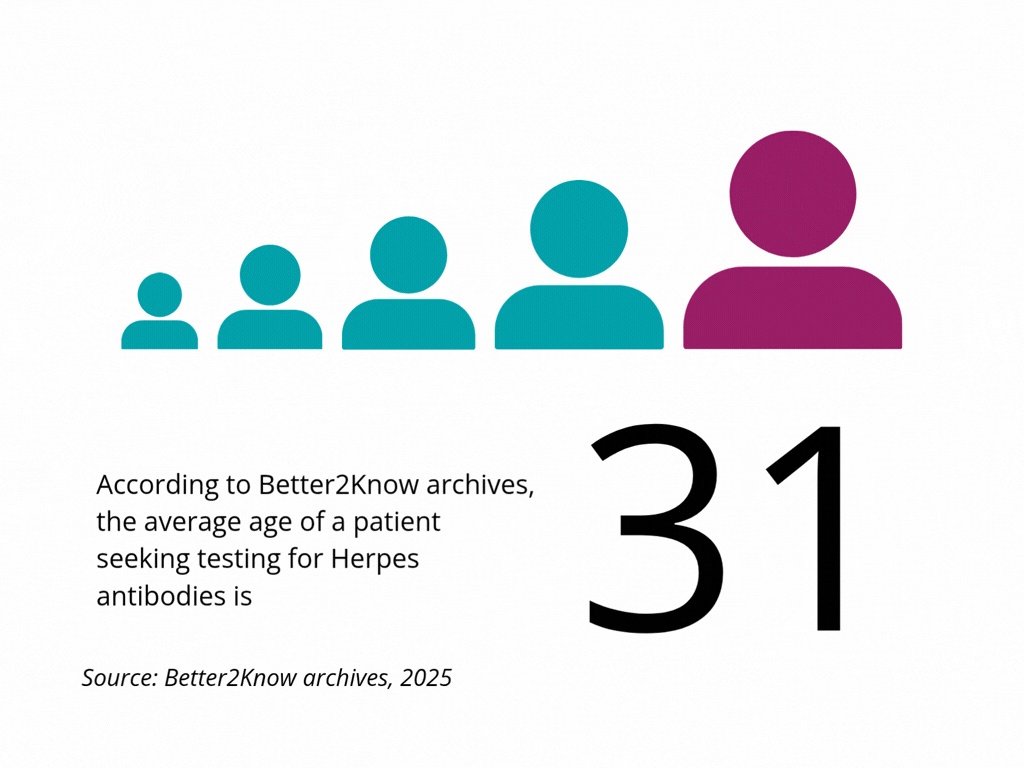
Interestingly, according to Better2Know’s archives, the median age of patients testing specifically for Herpes antibodies is 31, showing that many sexually active adults are proactively timing their tests to maximise accuracy rather than testing impulsively.
If you have symptoms
If you develop symptoms such as blisters, sores, itching, or tingling around the mouth or genitals, this is often the best time to test. This usually means that an outbreak is imminent.
A Herpes swab test should be taken as soon as possible, ideally while sores are still open. Swab tests are most accurate when symptoms are present and can determine whether HSV‑1 or HSV‑2 is causing the infection.
If you have no symptoms
If you don’t have symptoms but want to get tested for peace of mind, a blood test is usually recommended. Blood tests can detect antibodies even if you have never noticed an outbreak.
Testing is most reliable once enough time has passed since any potential exposure, allowing antibodies to develop fully.
Can you get tested for Herpes too early?
Yes, it’s possible to get tested too early, particularly with a blood test. If antibodies have not yet developed, the test may return negative even if you’ve been infected.
If you test early and receive a negative result but remain concerned, repeating the test after more time has passed can help confirm your status. At Better2Know, expert guidance is available to help you decide when retesting may be appropriate.
What if my partner has Herpes?
If your partner has Herpes, it doesn’t automatically mean you have the virus. However, we recommend getting tested anyway, especially if you’ve had recent sexual contact. Open communication and regular testing can help you take control of your sexual health together.
Final thoughts
Understanding the best time to get tested for Herpes can significantly improve the accuracy of your results and your peace of mind. Whether you have symptoms, have been exposed, or simply want reassurance, choosing the right test at the right time is key.
Better2Know offers confidential, accurate Herpes testing with fast results, helping you take control of your sexual health whenever you are ready.