
 5 minutes read5 minutes read
Summary:
- Finger cots are small covers for a single finger. Fingering isn’t the main way STIs spread, but a barrier can lower the risk, especially if you have cuts or sores on your fingers.
- UK sexual health advice mentions gloves rather than finger cots, particularly for fisting and rougher penetration, with plenty of lube. There’s no good evidence that finger cots prevent STIs.
- If you’re worried about an STI, the Better2Know Full Screen tests for 7 infections from 28 days after sex, with results in 3 days.
Condoms and dental dams get most of the attention in safer sex, but hands are involved in sex too. Finger cots are sometimes sold as a way to make fingering safer, so it’s worth knowing what they can and can’t do.
In this blog, we explain what finger cots are, how likely you are to get an STI from fingering and how to make it safer.
What are finger cots?
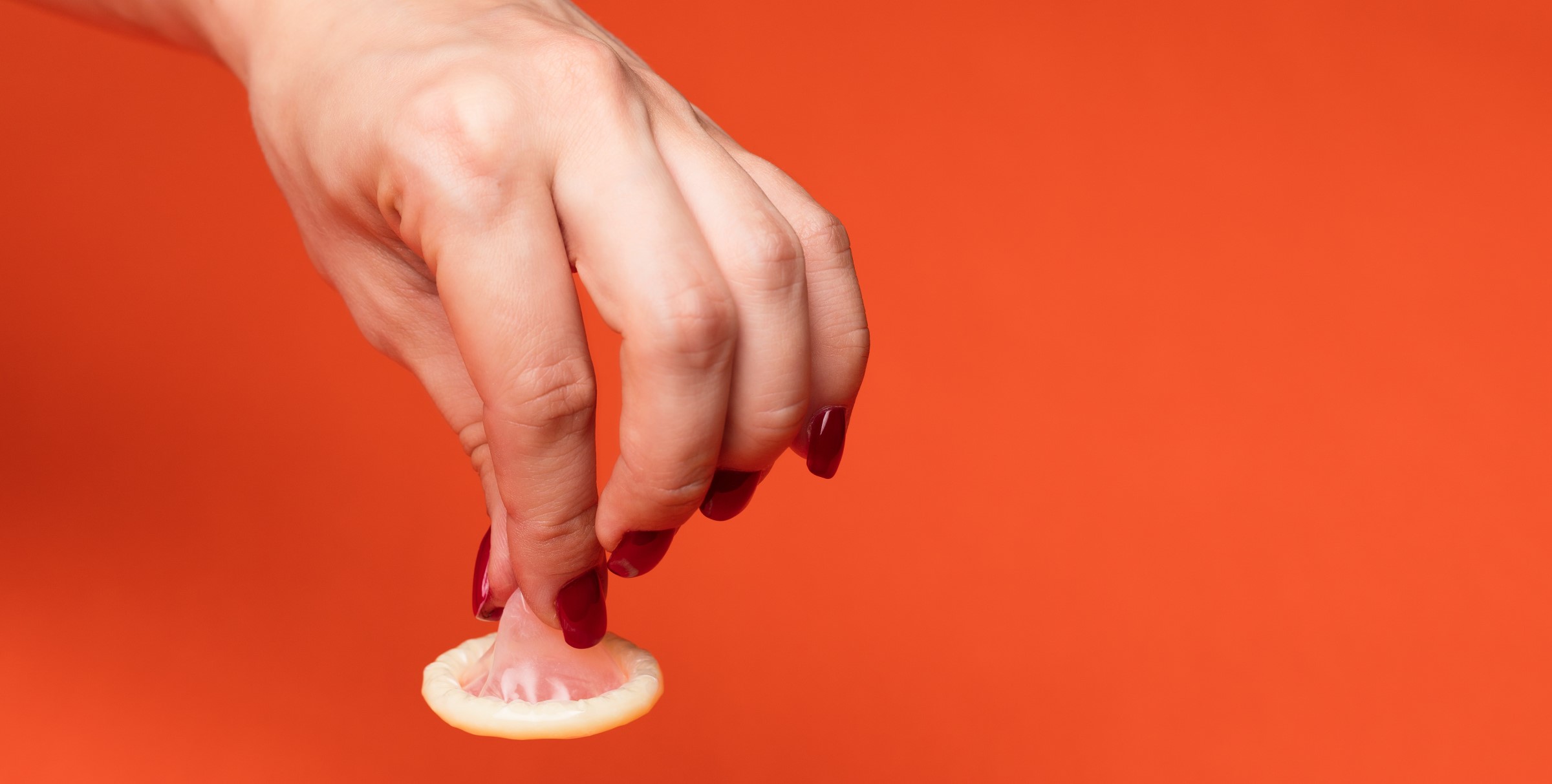
A finger cot, sometimes called a finger condom, is a thin cover that rolls onto one finger. They’re made from latex or latex-free materials, and they’re often used in first aid and healthcare to cover a wound on a finger.
Some people use them for fingering, to put a barrier between their finger and a partner’s genitals or bottom. UK sexual health advice suggests gloves instead, which cover the whole hand.
Can you get an STI from fingering?
Fingering isn’t the main way STIs spread, but it can happen:
- If you have cuts or sores on your fingers, the risk of passing on or getting an STI goes up.
- Herpes can be passed from someone’s genitals to yours on fingers, and it can also infect a finger itself, causing a painful infection called herpetic whitlow.
- HPV can be found on the fingers. In a small UK study of 22 people with genital warts, HPV was found on the fingers of 12 of them.
- Syphilis can pass on through contact with a Syphilis sore.
The NHS says some infections can be passed on by hands and fingers, and UK guidelines advise washing your hands before and after sex. Read more in “Can you get an STI from giving a hand job?”
How well do finger cots protect you?
A finger cot puts a barrier over your finger, so it makes sense that it could lower the risk of passing on an infection. But we’re not aware of any research showing that finger cots, or gloves, prevent STIs.
A finger cot also only covers one finger, so the rest of your hand isn’t protected. That’s one reason UK advice suggests gloves:
- UK guidelines recommend gloves for fisting and rougher penetration with fingers or hands.
- Brook suggests you could use gloves to touch the anus as a precaution.
If you have a cut or sore on your finger, covering it, or waiting until it heals, can lower the risk for you and your partner.
How to make fingering and fisting safer
These steps make fingering and fisting safer:
- Wash your hands before and after sex.
- Use plenty of lube. The anus doesn’t make its own lubricant, and its lining is thin and easily damaged, which makes infection more likely.
- After touching the anus, wash your hands or change your glove before touching the vagina. This stops bacteria from the anus getting into the vagina, where they can cause a urinary infection.
- With latex gloves or finger cots, use water-based or silicone-based lube, as oil-based products can damage latex.
- If you or your partner is allergic to latex, use latex-free gloves or finger cots instead.
Read more in “Is unprotected anal sex dangerous?”
Finger cots and sex toys
Finger cots are sometimes suggested for covering small sex toys, but that isn’t what UK advice recommends. The NHS and Brook advise washing sex toys between uses and putting a new condom on them each time, including for each partner and each part of the body.
Sharing sex toys can pass on STIs like Chlamydia, Syphilis and Herpes. Read more in “Can you get an STI from a sex toy?”
Which test do you need?
If you’re worried about an STI, Better2Know offers:
- Full Screen: tests for 7 infections, including Chlamydia, Gonorrhoea, HIV, Syphilis and Hepatitis B, from 28 days after sex, with results in 3 days (5 days for the home test). If you test before 45 days, a negative HIV result needs a repeat test. You can book it at one of our clinics or order a Full Screen home test.
- Peace of Mind: if you want to test sooner, it checks for Chlamydia, Gonorrhoea and Syphilis from 14 days after sex, with results in 2 days.
- Blemish Screen: if you have a sore, blister or wart, a swab tests it for Herpes 1, Herpes 2, HPV and Syphilis, with results in 5 days.
All three include a Syphilis test. A Syphilis test in the first 3 months after sex can miss the infection, so you may need a repeat test. Not sure which test you need? Our Patient Care Team is available 24/7 on 020 7099 0955.
FAQs
Are finger cots the same as gloves?
No. A finger cot covers one finger, while a glove covers your whole hand. UK sexual health advice suggests gloves, especially for fisting.
Can you get Herpes from fingering?
Yes, it’s possible. Herpes can be carried on fingers from someone’s genitals to yours, and it can also infect a finger. Avoid touching sores, and wash your hands.
Can I use a finger cot on a sex toy?
It’s better to use a new condom on a sex toy each time, and to wash the toy between uses.
Final thoughts
Finger cots can put a barrier between your finger and a partner’s body, but there’s no good evidence they prevent STIs, and they only cover one finger. Fingering isn’t the main way to catch an STI, and washing your hands, using lots of lube and wearing gloves for fisting all help.
If you’re worried about an STI, book a Full Screen at a clinic near you or order a home test kit from 28 days after sex. Our Patient Care Team is available 24/7 on 020 7099 0955.
About this article
Not in the UK? Choose your country from the selector at the top of the page for local tests and prices.
This article originally appeared on 5 May 2023 and was last updated on 3 October 2026.
This article is general information and not a substitute for personal medical advice.
Sources
- British Association for Sexual Health and HIV, UK national guideline on the sexual health care of men who have sex with men, 2016. https://www.bashh.org/_userfiles/pages/files/resources/msm_2016.pdf
- Centers for Disease Control and Prevention, Can I get or transmit HIV from…?, HIV Risk Reduction Tool, updated 14 June 2022. https://hivrisk.cdc.gov/can-i-get-or-transmit-hiv-from/
- British Association for Sexual Health and HIV, UK national guideline on safer sex advice, 2012. https://www.bashh.org/_userfiles/pages/files/resources/safer_sex_2012.pdf
- Brook, Anal sex, updated 27 July 2026. https://www.brook.org.uk/your-life/anal-sex/
- Brook, Sex toys and aids, updated 14 March 2024. https://www.brook.org.uk/your-life/sex-toys-and-aids/
- NHS, Genital herpes, reviewed 27 June 2023. https://www.nhs.uk/conditions/genital-herpes/
- NHS, Herpetic whitlow, reviewed 3 August 2023. https://www.nhs.uk/conditions/herpetic-whitlow/
- British Association for Sexual Health and HIV, UK national guideline for the management of anogenital herpes, 2024. https://www.bashh.org/_userfiles/pages/files/pateletal2024britishassociationofsexualhealthandhivuknationalguidelineforthemanagementofanogenital.pdf
- Sonnex C, Strauss S, Gray JJ. Detection of human papillomavirus DNA on the fingers of patients with genital warts. Sexually Transmitted Infections, 1999. https://sti.bmj.com/content/75/5/317
- NHS, Human papillomavirus (HPV), reviewed 10 March 2026. https://www.nhs.uk/conditions/human-papilloma-virus-hpv/
- NHS, Syphilis, reviewed 17 March 2026. https://www.nhs.uk/conditions/syphilis/
- NHS, Chlamydia, reviewed 24 October 2024. https://www.nhs.uk/conditions/chlamydia/
- NHS, Condoms, reviewed 26 January 2024. https://www.nhs.uk/contraception/methods-of-contraception/condoms/
- Health and Safety Executive, Latex allergies, updated 17 June 2025. https://www.hse.gov.uk/skin/employ/latex.htm
- British HIV Association, British Association for Sexual Health and HIV and British Infection Association, Adult HIV testing guidelines, 2020. https://bhiva.org/wp-content/uploads/2024/10/HIV-testing-guidelines-2020.pdf
- British Association for Sexual Health and HIV, UK guidelines for the management of syphilis, 2024. https://bashh.org/_userfiles/pages/files/syphilis_2024.pdf