

 4 minutes read4 minutes read
Summary:
- HPV is too common for testing to be medically useful in most cases
- Most people will get HPV at some point in their lives
- A normal STI test result doesn’t necessarily mean you don’t have HPV, so it’s important to know exactly what your screen does and doesn’t include
A lot of people assume that if they book a full STD screen, HPV will be included automatically. It’s a fair assumption. HPV is incredibly common, and it can be linked to genital warts and certain cancers.
So why do so many standard screens leave it out?
Why people expect HPV to be part of a standard STD screen
You might think that when you get tested for STIs, you’re getting tested for every infection under the sun. This isn’t the case.
Most STD panels will offer tests for common STIs that can cause serious damage to your health, like HIV, Chlamydia, Gonorrhoea, and Syphilis. For example, our Full STI Screen tests every patient for seven different infections.
But that’s not every STI, by any means. And as you may suspect, it doesn’t include HPV.
Why is this?
Why most screens don’t include a test for HPV
There are many reasons to get tested for HPV, from noticing genital warts to fears about cervical cancer. But there are a few reasons why HPV tests aren’t widely used.
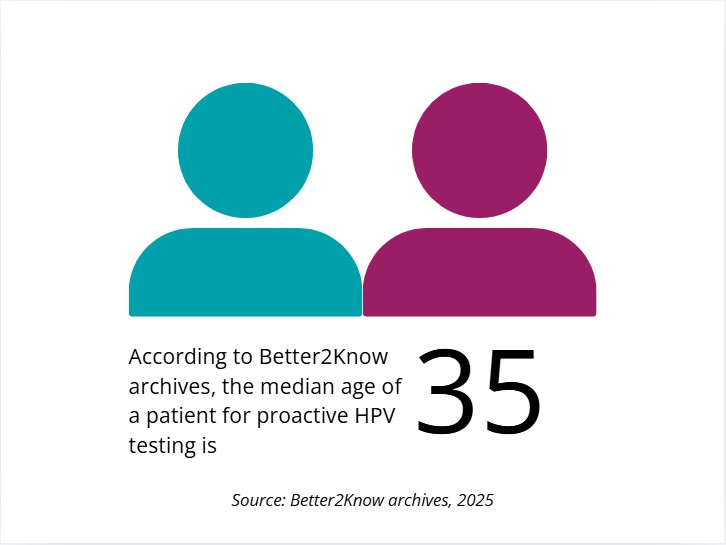
According to Better2Know records, patients under 35 make up over 53% of the testing volume for HPV, even though younger people make up the vast majority of testing for other infections. This could reflect concerns about certain cancers later in life.
You’ve probably already had HPV
It’s weird to think about, but you’ve probably already gotten HPV at some point in your life. In fact, HPV can be so common that some experts wonder how clinically useful it is to know if you have it.
HPV is often cleared by your body on its own
Since HPV has become so common, our bodies have learned to deal with it very well. Most high-risk and low-risk HPV infections are cleared from the body within a matter of months, usually not causing any symptoms at all.
Many people are already vaccinated against HPV
In many countries, HPV vaccination has become incredibly common. At the time of writing, 148 WHO member states have incorporated the HPV vaccine into national immunisation programs.
HPV testing is mainly used to detect cervical cancer
In most countries, HPV testing is mainly used as part of cervical screening rather than a routine sexual health check. National cervical screening programmes look for high-risk HPV in women because persistent infection can cause abnormal cervical cell changes, which may lead to cancer over time. If high-risk HPV is found, the sample may then be checked for abnormal cells.
That’s very different from a standard STI screen, which is usually built to identify infections that can be confirmed through blood, urine, or general swab testing.
Why you should get an HPV test
To confirm symptoms
If you have symptoms that could be linked to HPV, your doctor may think you should be checked to help confirm what’s going on. This might include visible genital warts, unusual lumps, itching, irritation, or changes to the skin around the genitals or anus.
To protect yourself against cancer
HPV is most often talked about in relation to cervical cancer, but some high-risk strains have also been linked to other cancers, including anal, penile, throat, vulval, and vaginal cancers.
FAQs
Can HPV be passed on even when there are no symptoms?
Yes. HPV can be passed on through close skin-to-skin sexual contact even when no warts, lumps, or other visible signs are present
How long can HPV stay in your body?
It varies. Many HPV infections are cleared by the immune system within a few years. The older you are or if your immunity isn’t optimal, the longer you may retain the virus.
Do condoms fully protect against HPV?
No. Condoms can lower the risk, but they don’t provide complete protection against HPV because the virus can affect areas not covered by a condom. They’re still worth using, but they’re not a guarantee.
Is there a treatment that gets rid of HPV itself?
There’s no treatment that directly removes HPV from the body. Instead, care usually focuses on dealing with the effects of the virus. In terms of lifestyle changes, improving the antioxidant state of your body will increase the chance of eliminating the virus, by either dietary changes or by stopping smoking.
Does the HPV vaccine protect against every type of HPV?
No. The vaccine protects against the common types most strongly linked to certain cancers, but it doesn’t cover every single strain, of which there are dozens.
Final thoughts
HPV is the most common STI, but it doesn’t fit neatly into the way most standard STD screens work. That’s why it is often left out, even from broad or premium testing packages. The key issue isn’t that HPV doesn’t matter. It’s that the tests most clinics rely on are designed to detect blood-borne and bacterial infections, whereas HPV typically requires a different kind of assessment.
If you’re worried about your sexual health, get in touch with Better2Know. Our team can help you book a comprehensive health screen at a clinic near you.
This article has been medically reviewed by Dr. Steve Chapman, 13/07/2026.