
 3 minutes read3 minutes read
Summary:
- You can get a Gonorrhoea infection in your throat
- Most people who get an oral Gonorrhoea infection won’t have symptoms, but can still pass it on
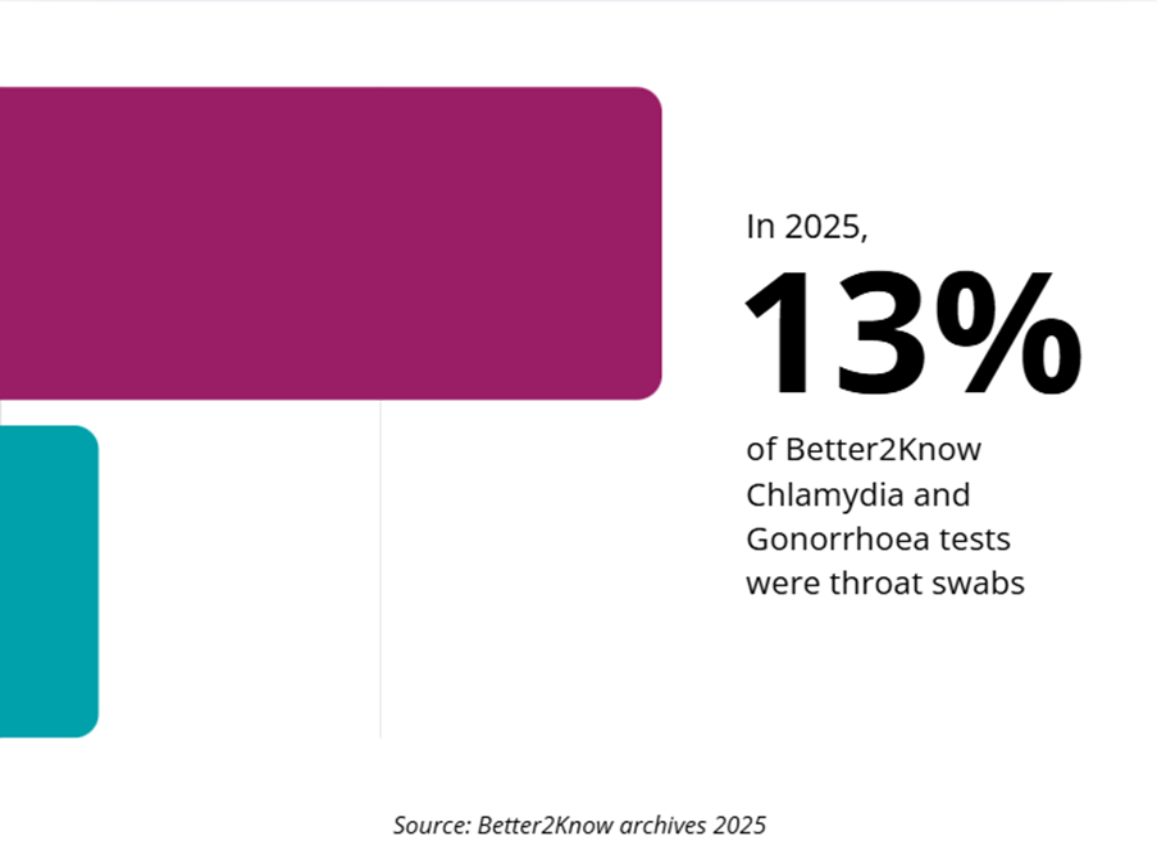
- Just over one in ten tests for Chlamydia and Gonorrhoea are throat swabs, showing just how prevalent this type of infection is
Yes, Gonorrhoea can infect the mouth and throat, and testing data confirms that this is far from rare. In fact, 13.3% of Better2Know standalone Chlamydia and Gonorrhoea tests are throat swabs, highlighting how commonly this infection is found outside the genitals.
Because oral Gonorrhoea often doesn’t cause symptoms, many people don’t realise they have it. That’s why understanding how it spreads, what to look out for, and when to test is so important.
What is oral Gonorrhoea?
We tend to think of STIs as infections that infect the genitals. But many STIs can affect the mouth and throat. Gonorrhoea is no different.
The bacteria that cause Gonorrhoea can easily infect the mucous membranes in the throat. Unlike a genital infection, though, oral Gonorrhoea doesn’t tend to cause many symptoms, and can go undetected for some time. When they do appear, they can be incredibly mild, manifesting as nothing more than a sore throat.
The infection can still be passed on to sexual partners. Which raises the question…
How do you get oral Gonorrhoea?
Oral Gonorrhoea is most commonly transmitted by performing oral sex on a partner (usually a man) who has a genital Gonorrhoea infection.
This usually happens with repeated and forceful contact between the infected penis and the mucous membranes in the throat. This is the best way for the bacteria to jump from the genitals to the throat.
Testing data shows that extra‑genital testing is highly skewed towards younger age groups, with 100% of dedicated throat swabs requested by patients in their 20s. This reflects both higher awareness and higher exposure risk within this demographic.
Can you get oral Gonorrhoea from kissing?
Transmission through deep or prolonged kissing is considered possible. For reasons that science still has to answer, this has only been observed between men. But don’t get it confused. Gonorrhoea can’t spread through casual contact, such as closed-mouth kisses, sharing drinks, or unwashed utensils.
I have symptoms – could it be something else?
Yes. A sore throat can have many causes, including colds, flu, tonsillitis, and other viral infections, all of which are transmissible in kissing.
This overlap is one of the reasons oral Gonorrhoea often goes undiagnosed. Interestingly, testing patterns show that over a quarter of all specific Gonorrhoea screening takes place on a Wednesday, often the point at which oral symptoms peak following weekend exposure.
How do I know what I have?
The only way to know for certain whether you have oral Gonorrhoea is to get tested.
Testing for oral Gonorrhoea usually involves a simple throat swab. If there has been other sexual exposure, your test may also include urine samples or genital and rectal swabs to ensure no infection is missed.
Even if you feel well, testing is important, especially if a partner has tested positive or you’ve had unprotected oral sex.
FAQs
Is oral Gonorrhoea treatable?
Yes. Gonorrhoea is treatable with the correct antibiotics when diagnosed promptly.
Can oral Gonorrhoea go away on its own?
Some cases will resolve on their own, but they’re the minority, and of course, you’re potentially infectious for other people meanwhile. Without treatment, the infection can persist and be passed on to others.
Should I avoid sex if I think I might have it?
Yes. It’s best to avoid sexual contact (giving unprotected oral sex) until you’ve been tested and, if necessary, completed treatment.
Final thoughts
So, can Gonorrhoea infect the mouth? Yes, it lands in the throat, and it happens more often than many people realise.
Because oral Gonorrhoea often causes no symptoms, regular testing plays a key role in protecting both your health and your partners’. If you’ve had unprotected oral sex, noticed throat symptoms, or simply want peace of mind, a test can give you clear answers and fast next steps.
This article has been medically reviewed by Dr. Steve Chapman, 13/07/2026.