
 5 minutes read5 minutes read
Summary:
- Not yet. In 2015, three London schoolboys won a TeenTech award for S.T.EYE, an idea for a condom that would change colour if it touched an STI. It was a concept, not a product, and we haven’t found any STI-detecting condom on sale in the UK.
- Today, STI tests look for an infection, or your body’s response to it, in a urine, swab or blood sample. Most are checked in a lab.
- The Better2Know Peace of Mind test checks for Chlamydia, Gonorrhoea and Syphilis from 14 days after sex, with results in 2 days.
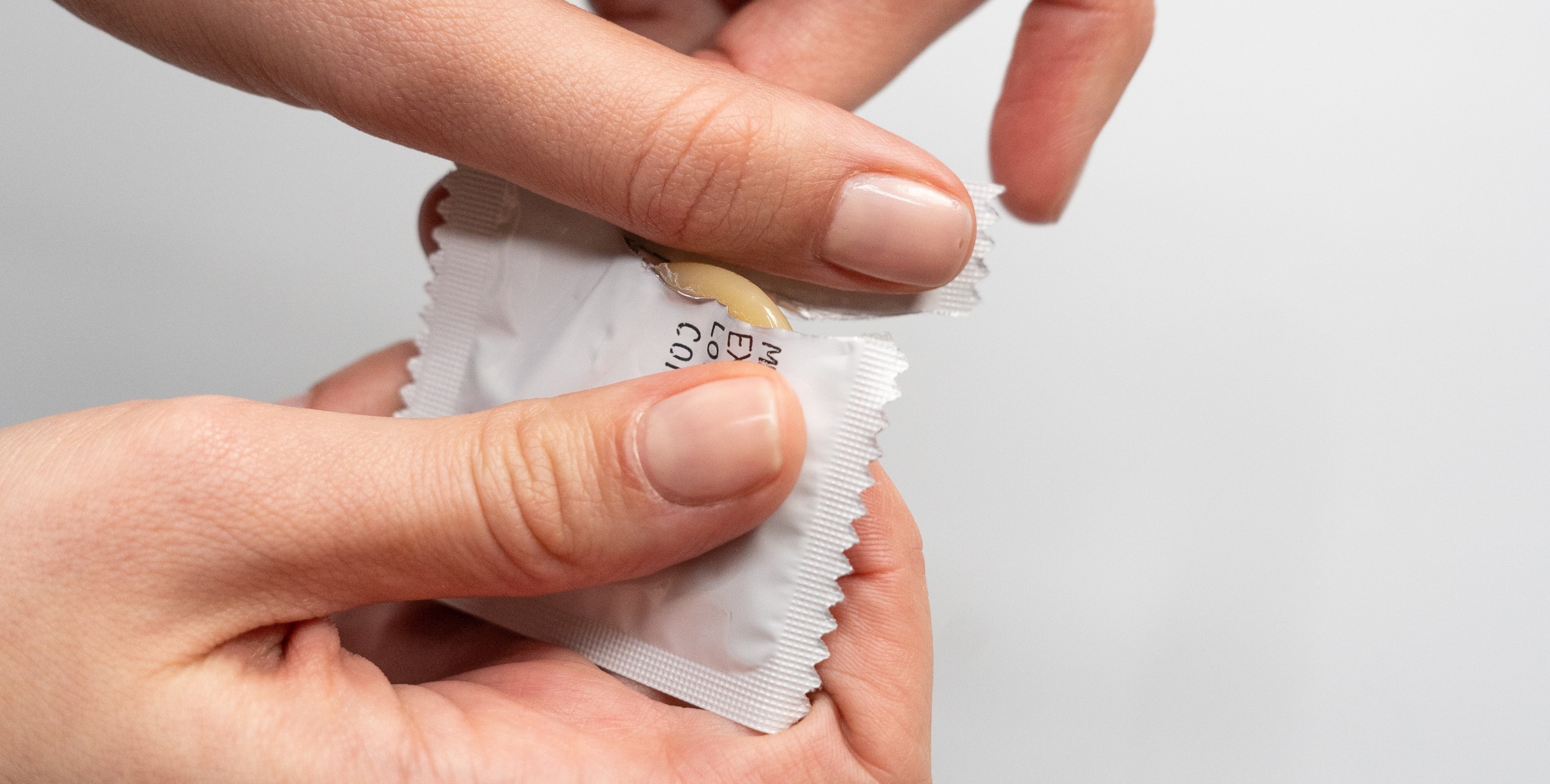
Imagine a condom that changed colour if your partner had an STI. It sounds like a neat way to find out, and in 2015 the idea won a team of schoolboys an award. So, can you buy one yet?
In this blog, we explain what happened to the idea, why it’s harder than it sounds, how STI tests work today and how to get tested.
Do colour-changing condoms for STIs exist?
Not as a product you can buy. The idea made headlines in 2015, when three pupils from Isaac Newton Academy in London won the healthcare category of the TeenTech Awards. Their concept, called S.T.EYE, was a condom with a built-in indicator that would change colour when it came into contact with an STI.
TeenTech described it as a concept idea, and said a condom manufacturer had approached the team. We haven’t found any later report of a prototype or a product, or any colour-changing or STI-detecting condom approved or on sale in the UK.
Why an STI-detecting condom is hard to make
Making a condom that tests for STIs would mean solving several problems at once. It would need to:
- find very small amounts of an infection. Many lab tests do this by copying an infection’s genetic material until there’s enough to detect.
- detect many different infections, not just one
- show which partner has the infection
- be safe to use and not weaken the condom
Any new condom would also need to meet the same safety standards as other condoms. The NHS says to check the packet for a CE or UKCA mark, which means it’s been tested to high safety standards.
How STI tests work today
Most STI tests look for the infection itself, or for your body’s response to it:
- Chlamydia and Gonorrhoea: a urine sample or a swab, tested in a lab with a nucleic acid amplification test (NAAT). PCR is one type of NAAT. UK guidelines call NAATs the standard of care.
- HIV: a blood test. 4th generation lab tests look for antibodies and a part of the virus called the p24 antigen, and are reliable from 45 days after a risk.
- Syphilis: a blood test for antibodies. A test in the first 3 months after sex can miss the infection, so you may need a repeat test.
- Herpes: a swab taken from a sore.
You don’t always need to visit a clinic. For many tests, you can take your own sample at home and post it to a lab.
What about rapid tests and self-tests?
Rapid tests give a result in minutes, but they have limits:
- UK guidelines say rapid HIV tests, including self-tests, are reliable from 90 days after a risk, compared with 45 days for a lab test.
- A reactive rapid HIV test always needs confirming with a lab test.
- Rapid Chlamydia and Gonorrhoea tests that don’t use NAAT can miss infections a lab test would find.
If you buy an HIV self-test, the NHS says to check it has a CE mark. If the result is positive, you’ll need a blood test to confirm it. Read more in “Instant STI tests in Glasgow: results while you wait”
How can you know if a partner has an STI?
You can’t tell by looking, and you can’t always tell by asking, because many STIs cause no symptoms. The only way to know is to get tested.
If you’re starting a new relationship, UK guidelines suggest testing at the start, and testing together can make it easier to talk about. Keep using condoms until you both have your results. Read more in “Should we get tested before having sex? How to talk to a new partner”
Which test do you need?
Better2Know offers:
- Peace of Mind: tests for Chlamydia, Gonorrhoea and Syphilis from 14 days after sex, with results in 2 days. You can book it at one of our clinics or order a home test kit.
- Full Screen: tests for 7 infections, including Chlamydia, Gonorrhoea, HIV and Syphilis, from 28 days after sex, with results in 3 days (5 days for the home test).
- Platinum Screen: tests for 12 infections, including Herpes 1 and Herpes 2, from 28 days after sex, with results in 3 days.
If you test before 45 days, a negative HIV result needs a repeat test. A Syphilis test in the first 3 months after sex can miss the infection, so you may need a repeat test. Not sure which test you need? Our Patient Care Team is available 24/7 on 020 7099 0955.
FAQs
Do condoms protect against all STIs?
No. They protect well against infections spread in semen and vaginal fluid, such as Chlamydia, Gonorrhoea and HIV, but Herpes, HPV and Syphilis can pass on from skin a condom doesn’t cover. Read more in “Can you still get an STI if you wear a condom?”
How do I know a condom is safe to use?
Check the packet for a CE or UKCA mark and a use-by date, and make sure the wrapper isn’t damaged. If there’s no CE or UKCA mark, don’t use it.
Can a home test tell me if I have an STI?
Yes. With a home test kit, you take your own sample, such as urine, a swab or a finger-prick of blood, and post it to a lab for testing.
Final thoughts
A condom that changes colour when it touches an STI is a clever idea, but for now it’s still just an idea. A test is the only way to know whether you or a partner has an STI, and condoms remain one of the best ways to protect yourselves.
Book a Peace of Mind test at a clinic near you or order a home test kit. Our Patient Care Team is available 24/7 on 020 7099 0955.
About this article
Not in the UK? Choose your country from the selector at the top of the page for local tests and prices.
This article originally appeared on 17 July 2015 and was last updated on 1 October 2026.
This article is general information and not a substitute for personal medical advice.
Sources
- TeenTech, TeenTech Awards 2015: the results, 24 June 2015. https://teentech.com/teentech-awards-2015-the-results/
- NHS, Condoms, reviewed 26 January 2024. https://www.nhs.uk/contraception/methods-of-contraception/condoms/
- Brook, Condoms, updated 1 July 2026. https://www.brook.org.uk/your-life/condoms/
- Brook, STI testing: FAQs, updated 28 November 2024. https://www.brook.org.uk/your-life/getting-tested-for-stis/
- NHS, Sexually transmitted infections (STIs), reviewed 13 May 2024. https://www.nhs.uk/conditions/sexually-transmitted-infections-stis/
- NHS, Chlamydia, reviewed 24 October 2024. https://www.nhs.uk/conditions/chlamydia/
- NHS, Genital herpes, reviewed 27 June 2023. https://www.nhs.uk/conditions/genital-herpes/
- NHS, HIV and AIDS, reviewed 9 July 2025. https://www.nhs.uk/conditions/hiv-and-aids/
- British Association for Sexual Health and HIV, UK national guideline for the management of infection with Chlamydia trachomatis, 2026. https://www.bashh.org/_userfiles/pages/files/national_guideline_for_the_management_of_infection_chlamydia_trachomatis_2026.pdf
- British HIV Association, British Association for Sexual Health and HIV and British Infection Association, Adult HIV testing guidelines, 2020. https://www.bashh.org/_userfiles/pages/files/resources/hivtesting2020wiley.pdf
- British Association for Sexual Health and HIV, UK guidelines for the management of syphilis, 2024. https://www.bashh.org/_userfiles/pages/files/syphilis_2024.pdf
- British Association for Sexual Health and HIV, Summary guidance on testing for sexually transmitted infections, 2023. https://www.bashh.org/_userfiles/pages/files/resources/bashh_summary_guidance_on_stis_testing_2023.pdf
- Medicines and Healthcare products Regulatory Agency, Medical devices: conformity assessment and the UKCA mark, updated 13 May 2026. https://www.gov.uk/guidance/medical-devices-conformity-assessment-and-the-ukca-mark