

 4 minutes read4 minutes read
Summary:
- Gonorrhoea can show up early – sometimes one to three days after you get the infection
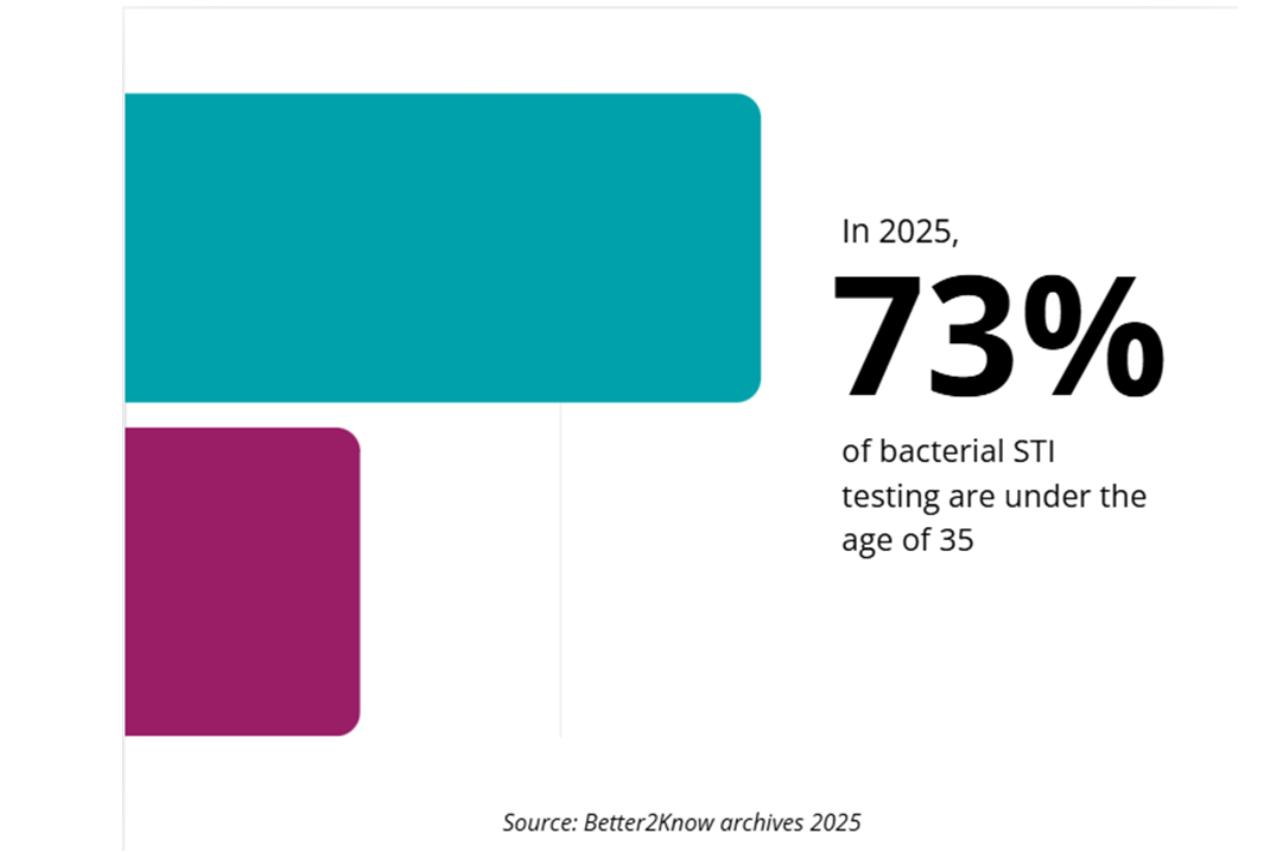
- 73% of bacterial STI tests are taken by people under the age of 35
- Gonorrhoea symptoms can come and go, but just because they go away doesn’t mean the infection has
Like many STIs, it can be hard to know if you have Gonorrhoea. Most infections are silent, meaning they don’t cause symptoms, and some infections are so mild that whatever symptoms they produce might be ignored.
One question we frequently get at Better2Know is how long it takes for Gonorrhoea to show its symptoms. This is a simple question with a complicated answer.
Keep reading to find out more.
What is Gonorrhoea?
Gonorrhoea is a condition caused by a bacterial infection. These bacteria, when caught during sex, infect the urinary tract, rectum, or throat – wherever they enter your body. Eventually, your immune system identifies them and fights back, causing most of the symptoms people experience during an infection.
How long does it take for Gonorrhoea to show its symptoms?
Gonorrhoea has a shorter incubation period than many other STIs. Symptoms can begin as early as one to three days after exposure, although most people develop them within two weeks.
This rapid onset is reflected in testing behaviour. At Better2Know clinics, Monday is the single most common day for targeted Gonorrhoea testing, accounting for 26% of all specific bookings. This suggests many people begin to notice symptoms over the weekend and seek reassurance as soon as the working week starts.
That said, the timing and severity of symptoms can vary depending on the individual and the site of infection.
Can you have Gonorrhoea without symptoms?
Yes, and this is one of the reasons Gonorrhoea spreads so easily.
A significant number of infections cause no noticeable symptoms, particularly in women and in throat or rectal infections. Even without symptoms, Gonorrhoea can still be passed to sexual partners and may cause complications if left untreated.
Younger adults are especially affected. At Better2Know clinics, over 73% of combined bacterial STI testing is requested by people under 35, a group that is both more sexually active and more likely to respond quickly when acute symptoms do appear.
What are the symptoms of Gonorrhoea in men and women?
Symptoms usually depend on where the infection is located.
Symptoms of Gonorrhoea in men
- Burning or pain when urinating, or difficulty urinating
- White, yellow, or green discharge from the penis, which is often abundant
- Less commonly, pain or swelling in the testicles
Symptoms of Gonorrhoea in women
- Unusual vaginal discharge
- Pain or burning when urinating
- Lower abdominal or pelvic pain
- Bleeding between periods or after sex
Rectal symptoms
- Discomfort or pain
- Discharge
- Itching or bleeding
- A feeling of “fullness”, similar to needing to do a bowel movement
Throat symptoms
- Often no symptoms
- Occasionally, a sore throat
When should I get tested?
You should get tested if:
- You’ve had unprotected sex with a new or casual partner
- A sexual partner has tested positive
- You develop any symptoms, even mild ones
- You want reassurance after a potential exposure
How can you detect Gonorrhoea with a test?
Gonorrhoea is detected using simple urine samples or swabs, depending on the type of exposure. Testing can often detect infection before symptoms appear, which is why waiting for signs isn’t necessary or recommended. We can advise when you should get tested.
What happens if Gonorrhoea is left untreated?
If untreated, Gonorrhoea can lead to serious health problems, including:
- Pelvic inflammatory disease (PID) in women
- Fertility problems
- Epididymitis in men
- Increased risk of acquiring or passing on other STIs
Early diagnosis and treatment greatly reduce the risk of complications.
FAQs
What’s the soonest time symptoms of a Gonorrhoea infection can appear?
Gonorrhoea symptoms can appear as early as two days after exposure, although for most people they develop in the first ten days. Some people may not experience symptoms at all, even though they are infected.
What proportion of Gonorrhoea infections don’t produce symptoms?
A significant proportion of Gonorrhoea infections cause no noticeable symptoms, particularly in women and in throat or rectal infections. Asymptomatic infections are common, which is why Gonorrhoea can be passed on unknowingly without regular testing.
How long should I wait before taking a Gonorrhoea test?
For most bacterial infections, Bette2Know recommends waiting at least 14 days before getting tested. This will allow the bacteria to reach critical mass within your system, allowing them to be detected on a test.
What does Gonorrhoea discharge look like?
Gonorrhoea discharge is most commonly described as white, yellow, or green, and is more noticeable in men. In women, changes in discharge may be subtler or mistaken for other conditions, which is why testing is important if there’s any concern.
Final thoughts
So, how long does Gonorrhoea take to show its symptoms? For many people, symptoms appear within a few days to two weeks, but for others, there may be no symptoms at all.
Because Gonorrhoea can develop quickly and silently, testing after risk, not just after the appearance of symptoms, is the safest approach. If you’re concerned, getting tested sooner rather than later can give you clarity and peace of mind.
This article has been medically reviewed by Dr. Steve Chapman, 13/07/2026.